
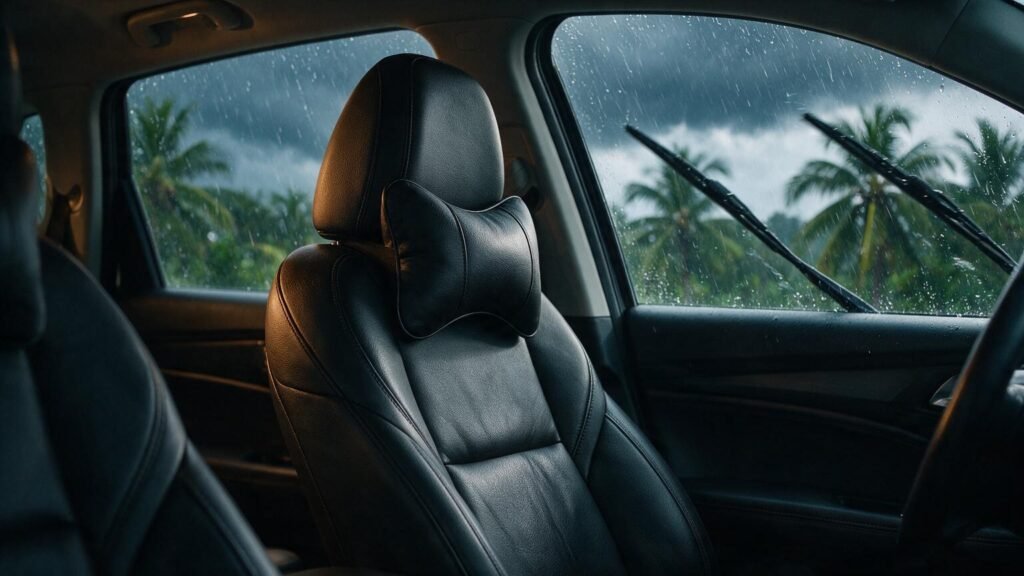
The sky turns an ominous grey at 4 PM, the first fat raindrops hit the windshield, and suddenly every road in Malaysia becomes a different beast. If you live here, you know the monsoon drill: blinding downpours, flooded underpasses, and that unpleasant damp smell that lingers in your car for days. But rain doesn’t have to ruin your drive.
Over the last few years of driving through Malaysia’s wettest months — from the November northeast monsoon on the east coast to the sudden afternoon thunderstorms that drench the Klang Valley — I’ve learned that a comfortable rainy drive comes down to a few simple things. Here’s how to make monsoon driving safer, calmer, and genuinely more comfortable.
Why Monsoon Driving Is Harder Than It Looks
Driving in heavy tropical rain isn’t just about visibility. It’s a full-body experience, and most of us underestimate how much it drains us:
- White-knuckle tension. Gripping the wheel hard through a downpour tenses your shoulders and lower back within minutes.
- Reduced visibility. Spray from other vehicles cuts your reaction time, so you lean forward and crane your neck — a fast track to neck strain.
- Wet, humid air. The moisture and temperature swing make long drives feel sluggish and tiring.
- Messy interiors. Wet shoes, dripping umbrellas, and muddy feet turn a clean car into a swamp.
Add these together and a 45-minute commute can feel like a three-hour ordeal. The fix isn’t just better wipers — it’s setting up your car so the situation bothers you less.
1. Get Your Seating Position Right Before the Rain Starts
A good driving posture is your first line of defense against fatigue. When you’re relaxed and supported, heavy rain feels far less stressful.
- Sit back, don’t hunch. Recline your seat slightly so your back rests against the seatback rather than hovering forward.
- Support your lower back. The lumbar curve is the first thing to collapse on a long, tense drive. A proper ergonomic lumbar cushion keeps your spine in its natural S-curve, so you stay upright and alert without clenching your back muscles.
- Let your neck relax. When visibility drops, we instinctively push our heads forward. A supportive neck pillow lets you keep your head neutral and your eyes on the road.
I learned this the hard way after a rain-soaked drive back from Genting — my lower back ached for two days. The difference after adding proper support was immediate: no more arriving at my destination feeling wrung out.
2. Protect Your Interior From the Water
Here’s a truth about monsoon season: the water gets in. It’s not a question of if your floors get wet, but when. The smart move is to make sure that moisture has somewhere sensible to go.
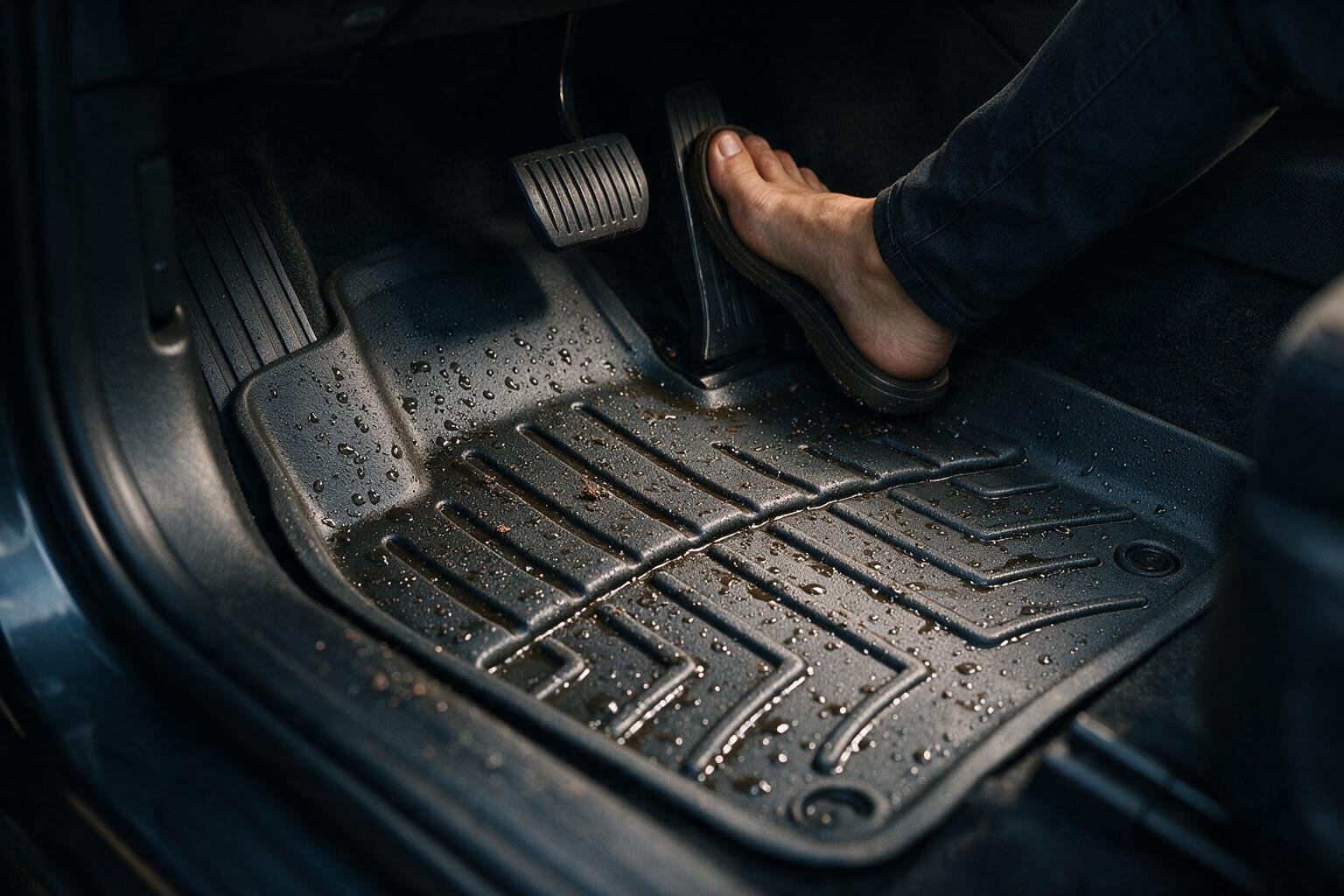
This is exactly where all-weather floor mats earn their keep. Unlike carpet mats that soak up water and slowly turn musty, a good rubber mat has raised edges and deep channels that trap rain, mud, and grit. When the storm passes, you simply tip the water out and rinse the mat — no lingering damp smell, no stained carpets, no mold.
Look for mats that fit your specific vehicle’s footwell contours. A loose, generic mat slides around under your pedals, which is a safety hazard in wet conditions. Custom-fit mats stay put and cover the high-traffic zones where wet shoes do the most damage.
3. Master the Rainy-Day Driving Basics
Comfort and safety go hand in hand. A few habits make a huge difference in a tropical downpour:
- Turn on your headlights. It’s about being seen, not seeing. Many Malaysian drivers forget this in the rain.
- Double your following distance. Wet roads need roughly twice the stopping distance.
- Avoid the deepest puddles. If you can’t see the road surface, you can’t see the pothole hidden underneath.
- Use the air-con to defog. Point the vents at the windshield and switch to fresh-air mode — it clears fog faster than heat alone in humid weather.
- Pull over if it’s truly dangerous. There’s no shame in waiting out a cloudburst at a rest stop with a hot drink.
4. Keep a Small Rain Kit in Your Car
Five minutes of preparation saves an hour of frustration. A simple kit lives in your boot or glovebox:
- A compact umbrella and a quick-dry towel
- A spare pair of dry shoes or waterproof sandals
- Windshield treatment or a good squeegee
- A reusable wet bag for soaked umbrellas
It sounds fussy, but when you step out into a downpour and have everything you need right there, you’ll thank yourself.
5. Reset Your Car After the Storm
Once the rain passes, take two minutes to air things out. Crack the windows on your next dry drive, empty any standing water from your floor mats, and give the interior a quick wipe-down. This small routine stops the humid, musty buildup that plagues so many cars during monsoon season — and it keeps your cabin a pleasant place to be, rain or shine.
The Bottom Line
You can’t control the weather in Malaysia, but you can absolutely control how your car handles it. A supportive seat setup, all-weather floor protection, and a few smart habits turn a stressful, soggy commute into just another comfortable drive. Monsoon season lasts for months — there’s no reason to dread it.
Ready to make your next rainy drive a calm one? Explore IDEEAUTO’s comfort and drive essentials — from ergonomic lumbar and neck support to custom-fit all-weather floor mats — at ideeauto.com, and build a cabin that feels good in every season. 🚗