
Why Your Lower Back Hurts After Driving (And 3 Simple Fixes)
You know the feeling. You park the car, step out, and your lower back is stiff. You stretch, twist, maybe pop a few vertebrae — and it takes a solid 10 minutes before you can walk normally again.
If this sounds familiar, you’re not alone. Lower back discomfort after driving is one of the most common complaints among commuters, road trippers, and delivery drivers alike. The good news? It’s usually caused by just a few things — and fixing them is simpler than you think.
The Main Culprit: Your Car Seat Wasn’t Built for Your Body
Car manufacturers design seats for the “average” driver — which means they fit nobody perfectly. Most factory seats have a few universal problems:
- Too much lumbar curve for some, too little for others — The built-in lumbar support is non-adjustable in many cars and rarely matches your spine’s natural curve.
- The seat base slopes backward — This tilts your pelvis, creating a curve in your lower back that puts pressure on your discs.
- No thigh support — Your legs dangle slightly, pulling your pelvis forward and arching your lower back.

Fix #1: Add External Lumbar Support
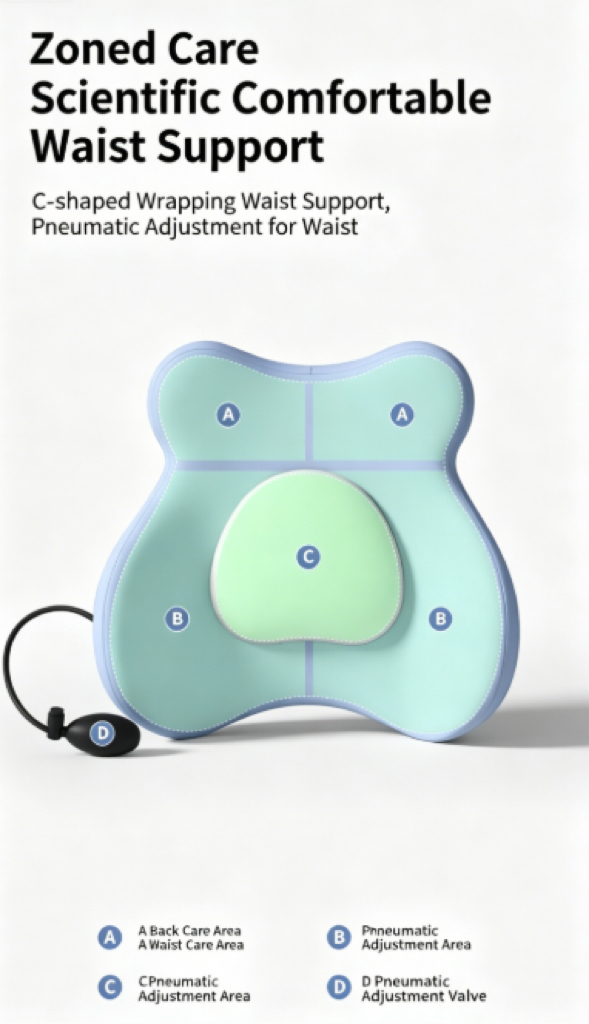
This is the single most effective fix. A good lumbar support pillow fills the gap between your lower back and the seat, keeping your spine in its natural S-curve. Without it, your back muscles constantly micro-adjust to hold you up — which is what causes that deep ache after 30+ minutes of driving.
Look for a lumbar pillow that is firm enough to hold its shape but has some give. The IDEEAUTO lumbar support uses high-density memory foam with an ergonomic contour designed specifically for drivers. It clips securely to your headrest so it doesn’t slide down when you shift positions.
Fix #2: Level Your Seat Base With a Cushion
Most car seats are angled so your knees are lower than your hips. This tilts your pelvis backward and flattens the natural curve of your lower spine. A seat cushion with a wedge or raised front edge can level things out, keeping your pelvis in a neutral position.
The IDEEAUTO seat cushion does exactly this. It has a contoured design that supports your thighs evenly while keeping your pelvis aligned. Plus, the breathable mesh cover means you won’t get sweaty on hot days.
Fix #3: Adjust Your Seat Position Correctly
Before you add anything, check your seat position:
- Distance: Your wrists should rest on top of the steering wheel when your arms are fully extended. If you’re reaching, you’re too far. If your elbows are bent past 90 degrees, you’re too close.
- Height: Your eyes should be level with the top third of the windshield. Sitting too low forces you to crane your neck — hello, neck pain.
- Steering wheel: Adjust it so your hands are at 9 and 3 o’clock with a slight bend in your elbows.
The Bottom Line
Your car seat was designed for an assembly line, not for your spine. With a few small adjustments and the right lumbar and seat cushion support, you can eliminate that post-drive stiffness and arrive at your destination feeling fresh.
Start with Fix #1 — it makes the biggest difference. After that, everything else is fine-tuning.
— Jacky